Table of Contents
Introduction
Thick Hair is considered to be hair target supreme – full, voluminous and definitely appealing to the eye. But, with Thick Hair, you know, it does not always happen so. Godsend, with so much frizz as there may be added, with such end, and there as much of this world to, as of this world it will, in pursuing its course, quit, to its horrid triangle, bulk is battle all the time. The truth? Thickness is not the issue; the improper haircut is the problem.
The correct style can transform Thick Hair beyond all. Squeezing panels, forming classes and crafting masterful surgeries of de-packaging can make thick strands feel and appear as light as running and flowing with a smooth and generalized appearance. Instead of grappling with your natural quantity one thinks to accept it and develop it as much as you need, to add motion to it, to take away any weight that you don’t need.
Why Thick Hair makes a Blessing
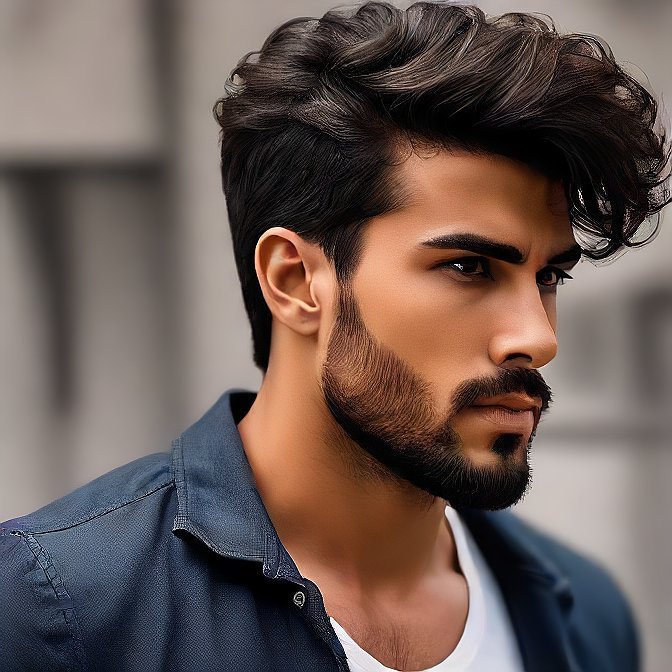
Thick Hair is the hair one will envy due to its natural density, strength and opulent appearance. It keeps the fashion longer, appears rounder in the photograph and is often not straight. However, in addition to density, there is a very big advantage it also has certain peculiarities, which are aimed at being neutralized by some smart cutting and modelling.
What is the Difference between Thick Hair and High-Density and Coarse Hair
Thick Hair is not Thick. and one must know the difference:
- Thick hair means that you have a lot on your head.
- Course hair is referred to as the thickness of each strand.
- Thick Hair may be strand dense and generally dense.
- Course set has also medium-density rough strands.
This difference is important since the techniques used in cutting will be different depending on whether it consists of a strand thickness or a number of strands.
Normal Thick hair
Thick Hair but beautiful might cause troubles in making other styling issues, such as:
- Bulk that causes the hair to be heavy.
- Light on the extremities, leaving it bottom-heavy.
- Cloamy, wet to the touch.
- The dreaded influence of the triangle, which causes the hair at the base to swell instead of falling.
- Longer drying-/styling-time.
Thick Hair can move with no movement and can be thick, especially when it is not properly shaped.
The Importance of the Right Haircut over Styling Products
Thick Hair is dealt with by many people using serums, creams and smoothing sprays. Nothing can cure poor organization yet it might be ameliorated through products.
A well-designed haircut:
- Redistributes weight
- Enhances natural movement
- The bulk will not be allowed to settle on the bottom of the mixture.
- Speeds up and eases everyday styling.
The self-layered hair when cut properly can be taken as Thick Hair.
Introduction of Strategic Cutting techniques in the transformation of thick hair
Not only are they short but with the assistance of some techniques that professional stylists employ, thick hair is unique. Not taking away the volume is like how to wield it and make it work.
Strategic debulking:
- Develop structure, ratio and symmetry.
- enable air and circulation among strands.
- Prevent the “helmet” look
- Eat without fat.
The transformation may be so dramatic that it feels lighter, softer and more comfortable to wear.
The Golden Rule of Haircutting – Trim Fat, Not Hair
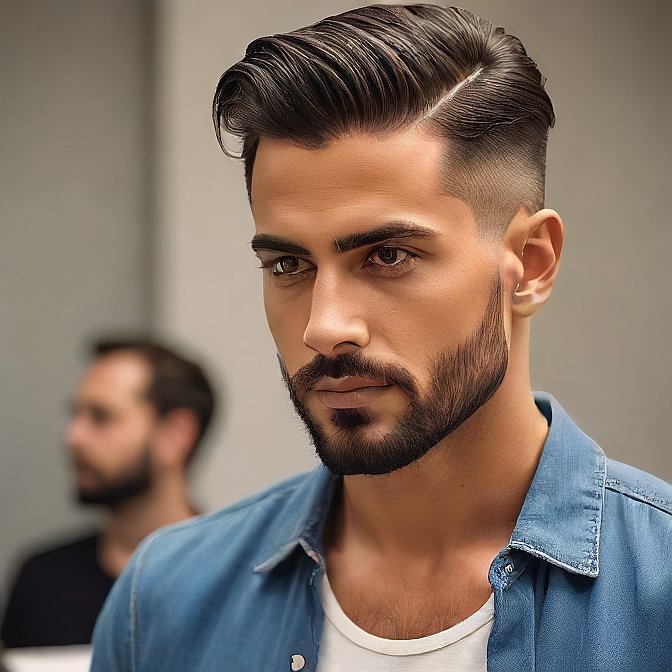
In this scenario, the biggest error you can make in Thick Hair is to have the hair cut shorter, such that it is easy to handle. There is no issue with length: the issue is the weight distribution.
The real solution? Mass on the inside, Form and Circulation
Internal vs Surface Layering
Internal layering takes out the bulk internally in the hair but leaves the outward appearance of the head drastically unchanged. This maintains the style as smooth as possible and less bulky.
Surface layering on the other hand surfaces layers on the surface. Although the imparting motion helps in creating a puffiness of Thick Hair, excessively overlayering the surface may make it puffy.
The secret of numerous people with Thick Hair is internal layering.
Texturizing, Thinning and Slide Cutting Reasoning
- Texturizing: Smears across the two ends heavy ends then pushes around, but does not diminish the volume.
- With thinning (using thinning shears): Removing less density out of strategic locations – but be careful.
- Slide cutting: This is applied in the process of getting rid of weight gradually without influencing the natural direction of the slide.
The techniques are used differently and it is the most effective stylists who mix the techniques in a way that they attain custom-made looks.
Indicators of When Not to Over-thin
Slimming Down Thick Hair may backfire. It may lead to:
- Frizzy ends
- Uneven texture
- A wavering and shaggy cheerfulness.
- Difficulty holding styles
The intention is not to have the hair standing bare as such but perfection is to strike the balance.
The method of how Professionals cut Thick hair
As a professional stylist, he or she takes into account:
- Hair density
- Strand thickness
- Natural texture (straight, wavy, curly)
- Face shape
- Clothing and style of dressing.
When crafting Thick Hair, professionals rely not on a one-size-fits-all approach when making sure it is significantly lighter but still looks thick and healthy.
Check Out: Long Hairstyles for Men: Sleek, Powerful Styles That Look Stylish Yet Clean.
BEST Short Hairstyles that assist in getting rid of bulkiness with thick hair
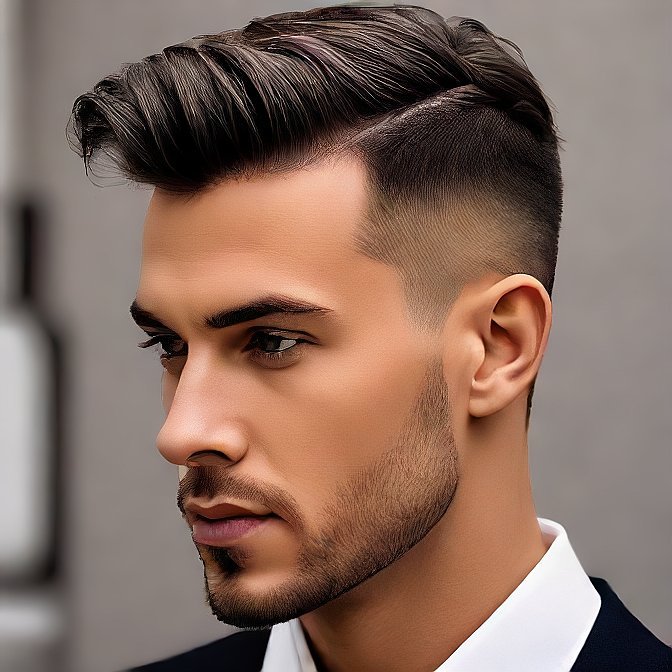
Only when cut strategically, Thick Hair can be transformed using two strands of hair, which, of course, must be short. It is not everything to chop it off. It does so to redistribute weight, make movement and prevent a bottom-heavy look. The right shortcut has the ability of making Thick Hair light, cooler and much easier to handle.
They are the wit and modesty of short fashions which truly save the bulk of the deficient fullness.
Textured Pixie Cut
An incredibly bold, and at the same time, most convenient way of looking after Thick Hair, is to pixie one of its bristles.
How does it lose excessive weight
- Densities are broken by means of little and choppy layers.
- Options out bulk crown and sides.
- Has a form not tight, but light.
Since Thick Hair is in its natural style, a pixie cut will not become flat.
Ideal Face Shapes
- Oval faces (proportions)
- Heart-shaped face (lends the face softness in the cheekbones)
- Square fronts (even out angles square)
It can also be put on round faces with heights at the top to be elongated.
Hairdressing Style-tips to get more volume
- Substitute thick wax with thin matte hairstyling gel.
- Blow-dry all ways to avoid stiffness.
- Make sides even at the top – accentuate the top.
The result? A contemporary, effortless fashion that is instantly much less heavy.
Layered Bob (The Anti- Triangle cut )
Then, as Thick Hair grows with a broad foundation rammed with mass, it has the answer. A layered bob is to be employed, particularly with a view to the aversion of the hated effect of the triangle.
Blunt Bobs are able to look big
Long, bob of a blunt sort:
- Pulls the weight on the lower portion.
- Grows bigger than it should naturally grow.
- Has the ability to create Boxy Hair.
Butter cuts work well on finer hair, but will emphasize the bulk of thick hair.
The effect of Layering on Structure
Adding layers:
- Flings down weight on ends.
- Forms motion in the form.
- Helps the hair to be straight down rather than fluffy.
Layers of Hair Overlay can be particularly effective in cases when you have to implant the hair or are attempting to increase the amount that has been knocked out of your head without making it look like the edge is thinning.
CHIN vs. COLLARBone Lengths
- Chin-length: Debulking, edgy and bold. Structured- responding to strategically debulking.
- Collarbone-length (long bob): It is longer and less weight-laden and the division is less weight-laden.
Undecided about it, the safest and flattering hairstyle in Thick Hair is most of the time the collarbone-length layered bob.
Shaggy Bob with Feathered Ends
The shaggy bob perfectly complements the Thick Hair when one wants to be in touch with the feel and look.
Lightening the Jaw
The main characteristic of this cut is:
- Eternal roots which reduce the drying matter in the mouth.
- A layer system whereby no score is designed to sit in any given level.
- A light and contemporary discontinuous shape.
Thick Hair no longer looks heavy, but is light and lively.
Amazing Thick, Wavy, Naturally Curly Hair
This technique is based on natural movement. In case you are 1 -With Thick Hair that is Wavy:
- The layers provide you with texture on your texture.
- It can be dried on paper to give a light finish.
- The slice avoids the overpowering of your face by the bottom.
It is among the least maintenance types of short styles as it does not go against the natural volume of your hair.
Conclusion
Thick Hair is thick, full of possibilities to be styled and once again it is without the cut it can easily look heavy and voluminous. They are not difficult to saw off the length of the paper to cut you all up; nor to cut you all across at each end. The tricky and clever decision of hairstyles is the one that sheds the pounds without engaging mobility and formatting into a challenging task.
Wearing Thick Hair should take the form of the most popular hairdo styles, centred on the balance with textured pixies and layered bobs, the lengthier layers of feathers and the filled U- or V-cut. When all these are combined along with internal layering, shaping, and adequate maintenance, your hair is much easier to handle, quicker to flatten and much more flattering.
Remember: Thick Hair is not S.O.P. Lousy weight distribution is. Your biggest advantage as far as your beauty is concerned, is density as far as the proper approach.
For more info: Click Here.
FAQs
1. Which type of haircut would be ideal for thick hair to lift it?
Layered cuts tend to be the most desirable cuts to plunge into in case of needing to work with bulk in Thick Hair. Examples of styles that have internal layers, either cut with a textured or shaped end (such as U-cuts or V-cuts) or a textured perimeter are used to remove weight but retain fullness. Do not wear, have a one-long blunt cut, if you have hair on your side.
2. Does it make skimpy Hair Frizzy?
This can happen, but it should be hyperbolic. Over-thinning may result in tattered, flaky ends, which frizz away. Thinning is expected to introduce mobility to it when properly used, still with good layering, but not to frizz. Not a painful process of debulking but the controlled weight loss.
3. Does Thick Hair make it more difficult to take care of?
Not necessarily. With the proper moulding and laying to it, long thick hair can be very easy to take care of. Excessive hair cannot be heavy or dense without layers. Club, however, may just be correct and even make length, taking the side of make weight more distributed and hence reducing puffiness.