Table of Contents
Introduction
As the owner of Thin Hair, you are already familiar with the plight of flatness of the roots, insistent length and those ends that go away regardless of the quantity of makeup that can be put into it. The good news? You need not have bulky extensions and infinite objects in order to create perspective. The right hairstyle will make you look and feel that you possess a lot of style yourself.
It is not about everything to cut hair but different cutting hair will make a difference. The construction, distribution of weight, placing of layers and shape are all potent influences in giving the illusion of density. The correct haircut will bring up the roots and add strength to the ends and make Thin Hair look fuller by changing the amount of Thick Hair immediately, making it look healthier and much more powerful.
Reasons Thin Hair becomes Flat (What actually Adds Volume)
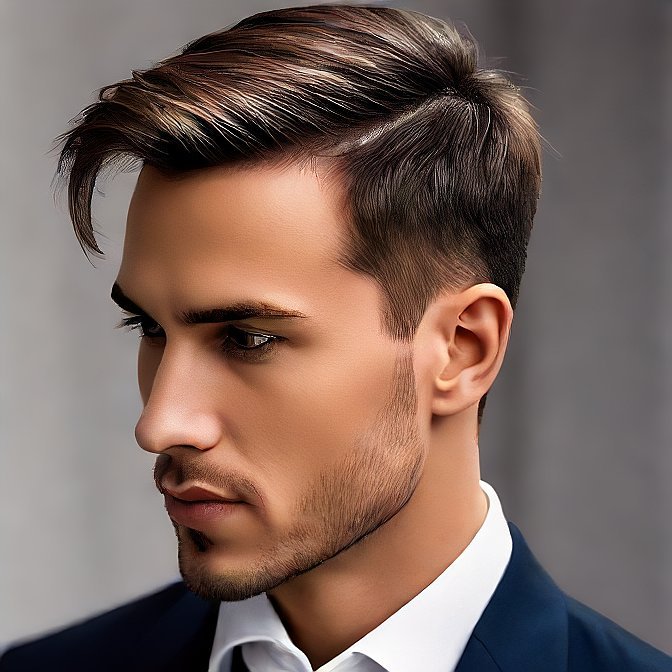
Thus, you might be aware that, as a thin-haired person, you manage to make it heapsible right down, or at the top. But knowing what causes it is the first stage towards a solution, volume is not just all about the amount of hair you put on your head, but actually the volume of the hair, what shape it makes, whether it is distributed densely or sparsely and how your hairstyle can give your hair some volume and movement.
To find out what exactly makes it so flat, to find out what exactly gives the impression that it is thick, we shall come to pieces.
Science behind Thin Hair vs. Fine Hair
Individuals will most probably mistake Thin Hair with fine hair and vice versa.
- The thinness of one of the hairs is known as fine hair. All the strands, nevertheless, are tiny and fine.
- Thin Hair is linked with density, or, in other words, you have less hair per square inch on your head.
You can have:
- Fine but dense hair
- Thin ( Thin Hair ) but thick strands.
- or smooth and fine hair.
The lower the density of the hair the less natural support at the roots. Hair will fall more easily when it does not have enough hair to keep the hair strands in place and hence the appearance of it being flat and dead.
Most of the frequent and uncommon errors that would strip the thin hair even further
The contour of the haircut and styling choices might get unintentionally fussed over by producing a sympathetic impression:
- Too many layers: TOO many layers lose weight and make ends appear meager.
- Razor cutting: Flattens the hair shaft, making wispy and see-through ends.
- Unnecessarily long: Thin Hair becomes longer, the more it is pulled down by gravity.
- This effect on conditioners is most weighty to roots: Hair is weighed immediately.
- No feel, pin-straight: does not add to the movement, which makes the illusion of fullness.
Thin Hair needs to be worked – not to be substance-less.
How the Strategic Cutting Techniques make Fullness on the Spur of the Moment
A good cut on the hair gives weight to the hair as to where the hair has to be lighted the most – most of the time it is at the ends and the top.
A few of the methods of doing it are:
- Blunt perimeter cutting, a solid straight bottom and straight ends result in ends seeming thicker.
- Arranging internally: Strategic elimination of inner mass, without diminishing the surface density.
- Gradation: Minimal accumulation of the little cuts in shorter lengths in the creation of volume on the top.
- Length optimization: Has selected the length (e.g. jaw or collarbone) of Thin Hair at which it appears fullest.
Not to depilate the hair is to make form.
Using Layer, Texture and Shape in the illusion of volume
Not layers are its antagonist, it is not proper layers.
Supposedly, it functions the following way:
- Long, thin sheets: impart action without being lost in bulk.
- Pieces of face-framing: Make meat of bones.
- Soft feel: Does not reduce density, but only lightness.
- Symmetrical: Haircuts such as blunt bob/formed lob forms the bottom weight of hair.
Think about, as architectural design, a well-designed form will bear the volume. Having properly considered layers, texture and formulation, Thin Hair may appear to be much more enriched with skimpy makeup.
Check Out: Low Fade vs High Fade: The Ultimate Guide to Choosing the Perfect Look.
Top Short Hairstyles To help thin hair appear thick
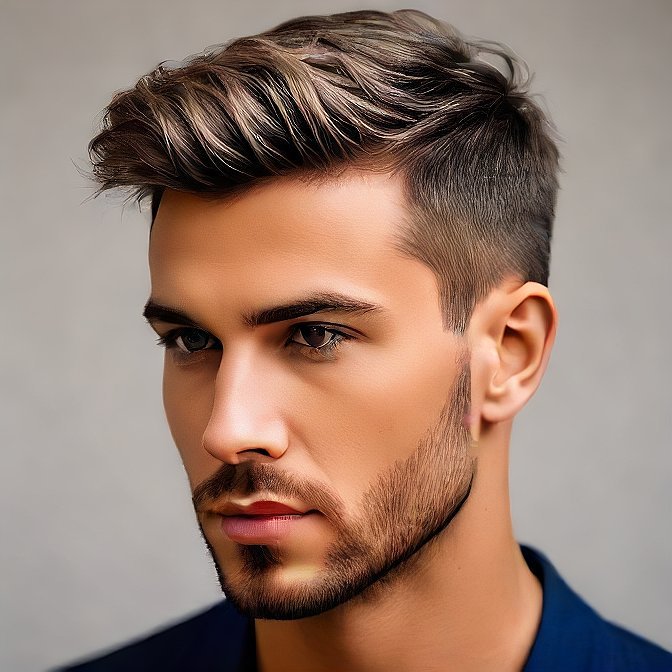
Thin Hair: With short hair, it can be easily made to look thicker. The shorter the length the less the push of the downward gravity to pull strands down will work- that is, roots are less hard to haul up, and the end product begins to appear fuller. The ruse is mindful, orderly cuts that do not, as they might seem, eliminate density, but provide it.
These will be the short styles that do indeed provide the actual and observable bulk.
Blunt Bob ( Density Illusion Cut )
The uncut bob is the only haircut that makes Thin Hair look thrice as thick.
It is due to this fact that sharps create the thickness of the images
The squat bob is also moulded and has no fluffy or feather points and is clipped. This clean edge provides much solidity to the bottom line and the ends appear not transparent, but solid and thick.
The hair is cut off and all hair strands lie at the same length to make an illusion of thickness.
Ideal Length to be as full as possible
The most complimentary lengths in the case of Thin Hair would be:
- Chin-length
- Just below the jaw.
- Very high above the shoulders.
Excessively lengthy lessens the illusion of solidity, excessively brief restrains the style. The collarbone to jaw is the best.
Who It Suits Best
- Straight or slightly wavy, fine hair.
- Those who are not persuaded by maintenance styling.
- Loved a bright and acute appearance.
It especially comes in handy when you tend to have stringy ends which normally appear this way is a panacea.
Textured Pixie Cut
A pixie will, can work Thin Hair – when so.
Lift Controlled Layering
A pixie has strategic, top-layering in it that is controlled, not overlayered with longer cuts. This gives lift and movement which is constructed into it, and the sides are fuller.
This is because the shorter length will enable the natural root volume to rise instead of being flat.
Styling Tricks: All-day Volume
- Wave your fingers to blow-dry, pushing up the roots.
- Put on a lightweight volumizing mousse prior to drying.
- Note: Paste a little texturizing paste over.
- Shun not to choke great creams that sink construction.
This cut is capable of becoming airy, full and contemporary by paying the least bit of effort.
What kind of hair do you need to wear in this Cut?
- Fine and Thin Hair
- Naturally straight hair
- Slightly wavy hair
Your Thin Hair can also not support even the fringe of longer hair length, neither in waves nor volume and so the pixie would be a game-changer.
French with Light Strophoeia
A less strict and slightly gentler adaptation of the standard blunt bob, the French bob will become the one that will fit the Thin Hair.
Jaw-Length Structure Benefits
This incision is normally at the level of the jaw and he or she creates the width and balance that is natural. A shorter and straighter length of the hair will not enable the hair to cascade anyhow, but will create the appearance of fullness in the face.
It gives a boost to cheekbones and the plumpness of the visual form of the lower part of the face as well.
The rationale behind Short Cuts being the most effective with Thin Hair
Shortcuts will trim the weight away, the roots will be raised up and the density will be concentrated where it will be needed the most. Thin Hair can be cut intentionally to resemble considerably thicker hair without the extensive use of styling products, especially with blunt edges, and with the layers applied in a regulated setting.
These shortcuts yield both natural and artificial immediate effects in the event that you are interested in immediate volume.
The most naturally designed thin haircuts (Yes, they exist)
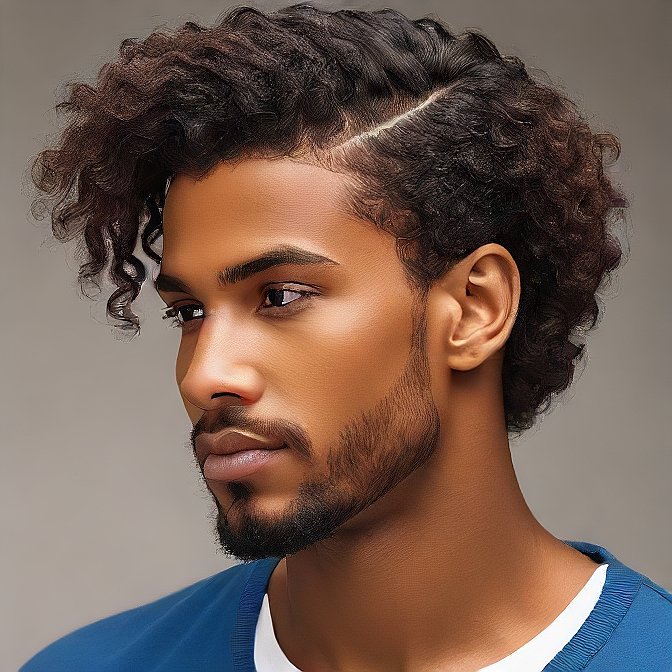
It is what many people think the Thin Hair and the long lengths do not blend — however, this is not entirely true. Or extremely long, flat kinds of haircut may make the hair thin, although a proper long hairstyle can make the hair move without the hair volume.
The secret? Guarantee end protection, control layering and choose shapes that imaginatively imply fullness.
The following are two long styles that are effective
Large Layers- Thick Bottom
No doubt that long hair can be made to seem full– provided the bottom is solid and built up.
Where Strata To start
Tablet layers should be used in the case of Thin Hair:
- Beginning underneath the chin (not at the top).
- Long and conjunct and not short and choppy.
- Mobility and not mass.
Relatively short, sharp layers which leave the scalp in a condition of exposure and no more than slightly above normal top density, and render the head lumpy in appearance. Instead, there are softness that make cascade-like layers that hold structures.
It must be an easy transition – not an idle separation.
Miss Moore: Ends Density
Secure the perimeter: the greatest principle.
The bottom line is sufficiently blunt, so as not to be stringy of the ends, but just a bit of bluntness or softness. Request your stylist to:
- Keep off the outer layer with a thinning shear.
- Minimize razor cutting
- Solid and in good condition, top 2-3 inches.
At longer lengths, the entire head of the Thin Hair even there, where the ends are thick, has a rounder appearance – but is fuller out of it.
U-Shaped Cut to the Fullness of the Natural
A U cut is one of the most intelligent surprises that one can play with the overweight long Thin Hair to make it appear to have some sort of weight.
The effect of the figure on the feeling of volume
Shape creates illusion.
You can do a straight-across cut on extremely long Thin Hair that will appear to have the heaviness at the center and the sides to appear flat. A U-shape:
- Adds softness
- Holds the centre in measure.
- Forms a modicum of fullness on the sides.
Its curved form allows the hair to fall in a more natural form, and has a measure of motion and depth without the loss of density.
It will create an equal lightness of the visual load – that is vital to Thin Hair.
Conclusion
And then there can be the form of my Thin Hair, without enjoying your natural hair, but to plan over this one. An ideal haircut may make a revolution in the amount and volume of your hair, even without your preference for using a heavy makeup brush and other extensions just to create volume.
The illusion of the thickness can be caused by the strength of the perimeters, the regulation of the overlay, the harmonies of the forms and adequate decision of the length. The apparent density is constructed with a structure in case you have a blunt bob, pixy texture or structured lob or a well-directed long cut.
Add lightweight volumizing products, regular trimming and cunning stylistic devices, and Thin Hair can look as if it is raised high, healthy and appears to be full.
Note: to be pointy is not to have more hair, but to have smarter hair.
For more info: Click Here.
FAQs
1. Is thin hair layered or not?
Layers need to be good–they should be long and fine. Over-layering adds too much bulk and gives the ends the appearance of being wispy. The smears are tactical and generate the sensation of motion while still maintaining the thickness.
2. Does Thin Hair appear to be thick without hair styling product?
Yes – the correct haircut will give the impression of fullness. A good perimeter, appropriate length and shape can go a long way to contribute to volume before the styling process. The effect is simply complemented by products.
I might even make a meta description, snippet questions that can be featured or a schema-compatible FAQs to increase the performance of your SEO, should you like.