Table of Contents
Introduction
The natural shine and smooth hair of straight hair is also claimed to absorb the natural shine, though without the appropriate cut it will get flat. It is there that Straight Hair Layered Cuts come in handy. Layered cuts are a means of having the straight hair that has been styled beautifully and yet not left lying flat, which creates movement, volume and form to the hair.
Softness, body and a slight element of volume are created with thick layers against blunt one-length styles that may tend to conceal weight and leave a person feeling heavy and deadened. Regardless of whether or not you have fine hair that must be made thicker, or whether you have thick and coarse hair whose weight must be removed, using the proper layering technique will completely overhaul your look, without creating a mess and a disheveled look.
Secret Dimension-free Layered Haircut
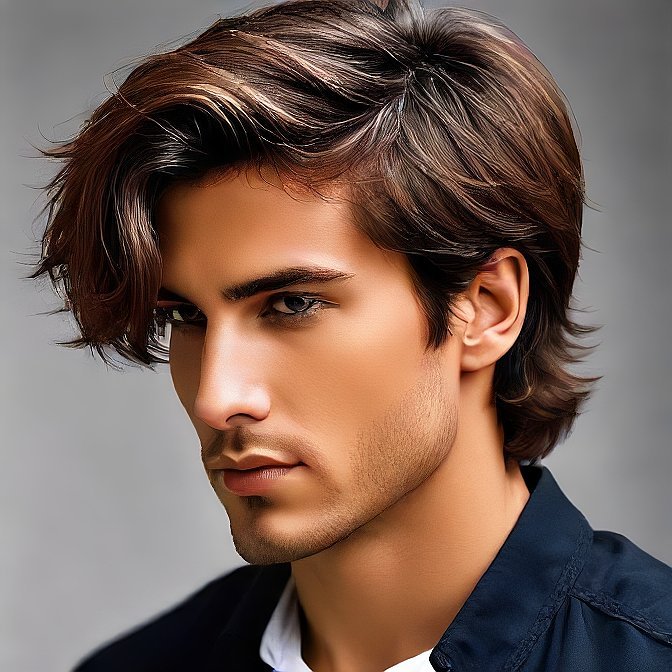
The straight hair is excellent in reflecting light and it might be flat or tends to be weighty. Straight Hair Layered Cuts are created to provide form, movement and depth- without sacrificing the smoothness and shine of the finished cut.
How to make flat, straight hair to lie
When cut at the same length, straight hair will not lie in a curtain, but will fall as a sheet. This might seem harsh but it is more likely to be flat. homogenising by shedding the load at increments of critical points.
The result?
- The crown natural lift.
- The half-lengths of the division of light.
- Softer and lighter ends.
- Ingrained form that with you follows.
Layered hair can flow and in a way have volume without curls or waves, but just fall straight down.
Science of Motion and Formation of Straight Textures
The straight hair will be straight due to the lack of weight distribution or the degree of directionality of the strands. Strata disfigure the evenness of maize in that.
This is structurally the way it works:
- layers that are long on the top are shorter at the bottom.
- Low density means that strands are able to move more freely.
- Creating natural lift and swing is made possible by graduated lengths.
- The height of the strikes of light varies, improving the lightness and depth.
It is this length that allows the straight hair to look like a figure and gesture, not frizzed or puffed.
The goal behind the use of the Layers in avoiding the Heavy Curtain Effect
The thick cut hair setting on the bottom is also blunt and thick with the impact of the thick curtain. It can:
- Drag facial features along.
- Appear to plumpen out hair.
- Hair that makes it look flat.
- Hair Hide is naturally shiny because of overdensity.
Layering eliminates the bottom-heavy portion and reallocates it in the cut. They are more airy, elegant and not so Koolie-Hostile,–they are a harmonious figure and not a block of hair.
Who Does Straight Hair in Layered Cuts Benefit the most?
Layered cuts don’t go with any kind of hair, but, given the right strategy of doing it, it will go with most of them.
I shall do well to:
- Use straight hair (thin hair) but it should be volumized.
- dense straight heavy hair.
- Wish it had more movement, without a decrease in length.
- Prefer to be smooth but at first does not like flatness.
- Would like it to be more aesthetic, cut up.
This is a secret, customize the length of your layers and density to your hair density and lifestyle.
The Largest Advantages of Straight Hair signs-cut
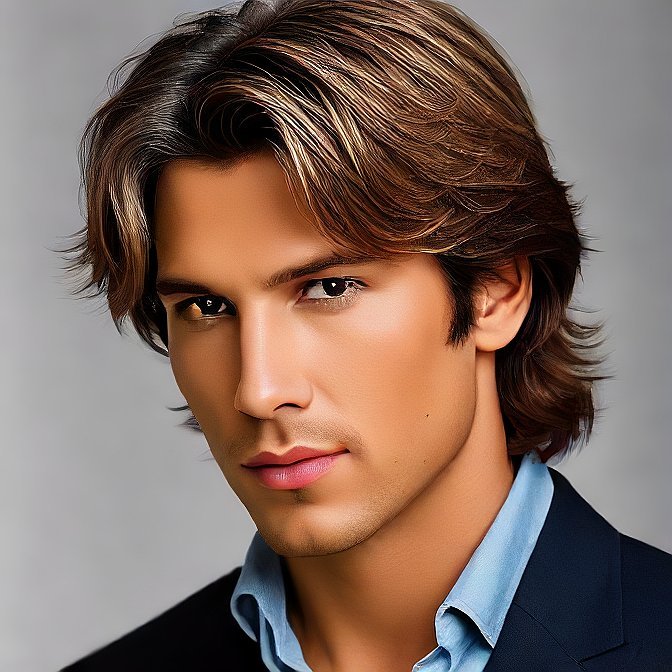
Gives the Natural Volume – No Curls
No waves or texture sprays are required to have a body. The layers in the ends thereby form a lift at the base and penetrate the lengths of the hair, implanting natural fullness to the hair and providing it with smoothness.
Makes Soft Face Framing
Face-framing layers:
- Highlight cheekbones
- Soften jawlines
- Provide shape to the face.
- It seems like she has volumized and made straight hair purposeful.
They also gel into ponytails and updos to appear more sleek.
Lube oil: Thickens the bulk of Hair
The straight hair is bulkier and difficult to work with. Layering:
- Removes internal weight
- Prevents triangular shapes
- Increases faster drying and air circulation.
- Makes style less intricate.
It is because of a limited volume and not gross volatility.
Gives Fine Straight Hair more Fullness
Delicacy of the hair requires accuracy of overlaying -we do not want it too thin. Subtle, long layers:
- Prevent flat ends
- Add bounce
- Produce the effect of thickness.
- Keep the density at the perimeter.
In wrought, strands of hair are not reduced.
Increases Shine and Polish
The hair is most reflective as long as it is straight and organised. Layers create different types of reflective surfaces that:
- Increase light movement
- Passages ought not to be dull.
- Add natural dimension
- Increase the sense of smoothness in general.
What comes out is a well-nurtured, mindful and professionally primped hair, despite their bad hair day.
Check Out: Modern Mullet for Wavy Hair: The Ultimate Styling Guide for a Bold, Confident Look.
Hair Length Cuts: Best Straight Hair
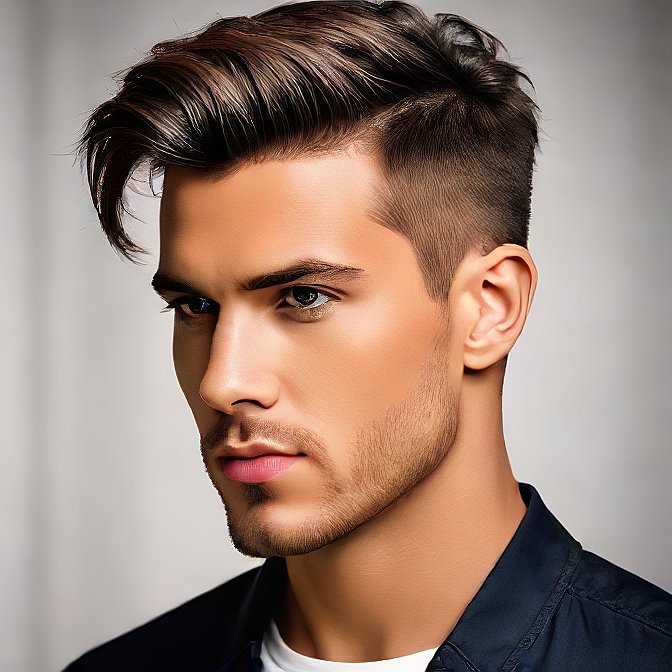
Among the greatest benefits of Straight Hair Layered Cuts is variety. It is possible to wear it tight and tight, or long and loose–flowing, the right layering style can provide a complete makeover and maintain the look smooth and perfect.
Short, Straight cut Layered Sections (Chic & Structured)
Being blessed with short straight hair, which is going to be layered up, was a blessing because it will not be that stiff and will possess some natural form.
Layered Pixie Variations
Here is a pixie over or overlapping, and completes a hitherto pointed shape, which imparts to it a three-dimensional quality and dynamism. Strategic layering:
- Lifts crown.
- Softens sharp edges
- Develops non-curly texture.
- Ends the cut-off on the flattening.
A trendy, chiseled look and perhaps the outlook will be the short hand-sides and long top layers, but nevertheless feminine and graceful.
Textured Short Bob
A short bob, so fine in lieu of heavy, will be light and dynamic, in comparison with a blunt bob. Layering helps:
- Avoid a boxy shape
- Adding a natural volume to the roots.
- Take soft, distance at extremes.
- Shun the hole to appear beautiful.
It works best on straight hair which requires structure and not weight.
Soft Stacked Cuts
Stretching is done gradually from the back to the front, slowly, and the stacked cuts may have the back cuts (shortcuts) stretched. To pile straight hair, soft piling:
- increases in size on the top.
- Has a curved headless neck and is unstreaked.
- Lends a texture but is not over-texturized.
- Have a smooth surface finish.
It is perfect when one wants shape, and when it involves a bit of effort as far as styling is concerned.
Medium-length straight cut front layers
The in-between i.e., medium styles are neither too long nor too short to play with.
Long Layers (shoulder length)
The motion of the hair can be facilitated by long, thick layers of hair around the shoulders, and the density of the hair is not lost either. Benefits include:
- In the mid-lengths, now mid-flow natural.
- Low volume and does not thin the ends.
- blonde hair to wear it either straight or loosely-waved.
- A massively slender figure.
It is one of the cuts of straight hair layered that is least maintenance.
Slaughtered Waist-length Lob
Layered lob is contemporary and advanced. Multiple-layer foundation of a long bob:
- Eliminates the effect of the triangle.
- Feels good but does not lose its smoothness.
- Enhances face framing
- Maintains the fence in order.
It is best to wear when one wants an item that is formal but dimensional at the same time worn by those in the workplace.
Subtle Feathered Ends
The feathering of the end is usually best effected at the end, and not everywhere about the cut. This technique:
- Softens blunt edges
- Produces lightness, movement.
- Supports the top-most oil.
- Will work with long, straight hair.
It is not overpowering and it works so well.
Long Straight Polished Layered Cuts
Long straight hair is lustrous when drawn on to form a build that is lost neither in length nor in any way.
Long Cascading Layers
The layers are placed in a progressive manner, with the length of the hair on top of each other. They:
- Add fluid movement
- Prevent bottom heaviness
- Create a natural body
- Enhance the brightness through the reflection of light.
It is a type of slick, glitzy and classical fashion.
U-Shaped Layered Cuts
The length is preserved in a U-shaped cut with a gentle curve on the ends. When layered:
- Border is not acute.
- The motion is movement downwards.
- Thickness is preserved
- It is shiny on the surface.
It is most suitable for those who desire the factored semi-forms, but not too carved forms.
V-Cut Layered Styles
Taper is more dramatic in the center back, creating a V-cut. Layering adds to this shape by:
- Emphasizing length
- Adding dramatic flow
- Lightening thick hair.
- Creating an attractive figure.
This especially applies to thick straight hair.
Unnoticeable Finishes on Ultra-Sleek
Invisible layers should not be seen but they should be able to move. They:
- Remove internal bulk
- Have smooth outer leaves.
- Add subtle lift
- Keep the surface of the glass transparent.
Favorite among those who love ultra-straight styling, in the background.
Conclusion
When properly done Straight Hair Layered Cuts are in the most sought after zone to be slick and yet deep. They are placed in a flowing form of structure with bare formless strands without the shine or polish being retained. Regardless of the length and shape of your hair, be it in the middle length and diverse, long and dramatic, a layer will provide your hair with movement, unnecessary weight will be removed, and your hair will look more natural.
The real glamour of layered cuts of straight hair is in customization. In order to embroider with radiant deposits of transparency to release your declamations of flowing lines, the appropriate technique will be able to favor your own face, showing your density and be adjusted to your habitual process. And it is not that you are fighting out with a flatness, or a heaviness: rather you are playing with your hair, you are making up a fancy appearance, which is nonchalant, and with a purpose at the same time.
For more info: Click Here.
FAQs
1. Do the Straight Hair cuts with layered cuts make the thin hair?
No, not when duly. The over-layering can result in placing a fine hair-thin layer, but when layered with what would be referred to as long will appear to be full as well as provide movement and lift. This is the secret: to make the ends heavy, but interiors light.
2. Which are the frequency of trimming Straight Hair Layered Cuts?
The majority of the layered cuts require that the hair be cut on a 6-8 week basis so that it does not grow in the shape of a layer and so as not to have split ends. The shorter/layer/structured bob you might have might need a premature 5-6 weeks service.
3. Do layer cuts entail a lot to keep the hair straight?
Not necessarily. In fact, they tend to make it less challenging to make the hair look as cool as the figure is part of the cut. Correct layering will accomplish a natural fall of hair thus one will not be required to apply much heat to the head to shape up its hair.
4. Will it work with straight hair that is fine?
Yes– however, the layers are to be neither thick nor rugged nor short and choppy. Both the invisibility and soft and long layers of hair used must ensure that the fineness of the hair enables the hair to retain its thickness and thus generate some movement.
5. What’s the difference between blunt cuts and Straight Hair Layered Cuts?
Perforations are done in a uniform length, which is acute and with sharp edges. It is the Straight Hair Layered Cuts with Shaped cuts: These are cuts that can be of different lengths and are extended downwards along the hair shifting the weight and adding movement, softness and volume to the hair, yet the sleek look is maintained.