Table of Contents
Introduction
The Mullet Haircut has also come back with its powerful thrust – it is no longer a thing of a decade ago. The mullet is wittier, more sophisticated and individualized now than ever. Fading to abrupt bursts. There are few changes between barely noticeable tapers to bold escapes of style that put in a single, head-turning glance the sense of confidence, of edge and of individuality.
Because of this type of style, having both short sides and a longer back, the style needs to be balanced and maintained consciously. Overgrowing of the sides causes a loss of character by the shape. In case the back is not a solid surface or it is not smooth, then the whole cut can be indisputably not a modern one. This is brought on by the fact that it is maintenance that can turn or break an outfit-conscious mullet into a car-load of dirty clothing.
The good news? Not to stay out of shape, you do not require any fancy steps or expensive trips to the hair and skin salon to trim your Mullet Haircut. With the proper trimming schedule, clever selection of products and a hassle-free everyday dressing system, you will have that audacious construct and a new look every week.
Mullet Haircut
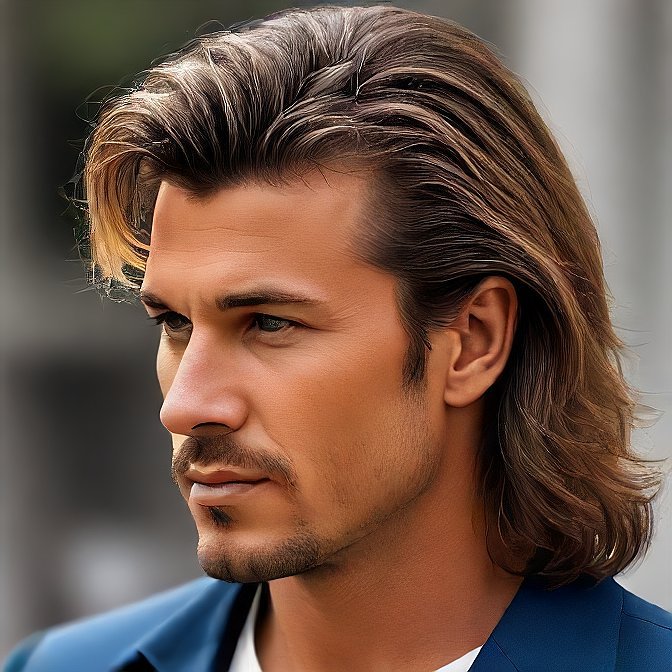
A Mullet Haircut is a difficult style to maintain in a proper manner, before you can even maintain it. The mullet is created with contrast compared to the homogenous hairstyles, which are long everywhere but short elsewhere. Precisely that contrast is what makes it stylish but something which makes it warrant maintenance.
The Party in Back, Conventional Business in Front Idea
The fundamental philosophy behind any Mullet Haircut is to be decently groomed and tied up in the front and rebellious and protesting in the back.
Short Front and Sides
The front and sides are cut shorter to make form and acuity. Fades or tapers, cropped tops and textured tops, or clean sideburns and necklines are often found in this area. As this section outlines your face, it sticks out far more. Frequent trims give a silhouette that is sharp and the cut appears even.
Longer Back Section
Personality is placed on the back. Length can be in different styles: subtle and overlayed or long and dramatic. The focus of maintenance in this case involves prevention of split ends, prevention of dryness, maintaining the layers mixed, and the desired shape. If the back is too heavy or unbalanced, then the entire Mullet Haircut is likely to lose balance.
Newer Types of Variation that need varying maintenance
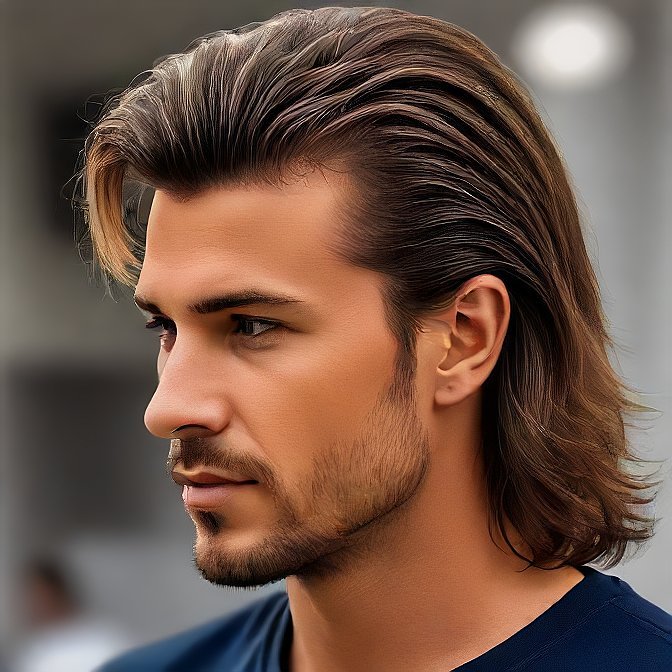
Not all mullets are created equal. The newer models have different maintenance plans.
Burst Fade Mullet
This one bears a round fade on the ear, which breaks into the extended back.
Maintenance considerations: necessary fade maintenance (clean-up every 23 weeks), and edge tracing around ears, and the blend to be sharp. Fleas disappear and thus one needs to go to the barber frequently.
Tapered Mullet
A less violent design with a minor shortening towards the neckline.
Governance focus: minor repairs on the neckline and to make it smooth without any sharp edges. It also has cheaper maintenance than a burst fade and it has regular shaping.
Curly Mullet
The curly hair is volumizing and does not have to be styled.
The rule of thumb: hydrating products and anti-frizz products, creams that shape the curls, and products that are not bulky. Without taking care of the hair with water, Curls will dry out.
Textured Mullet
This style is founded on the layers and movement in contrast to dramatic length distinction.
Maintenance consideration: matte styling product, regular clipper trimming, and not to allow product build-ups on the hair. The texture is very easily eliminated on overgrowth of the cut.
The Hair Type and Haircut Maintenance Effect on Mullet Haircuts
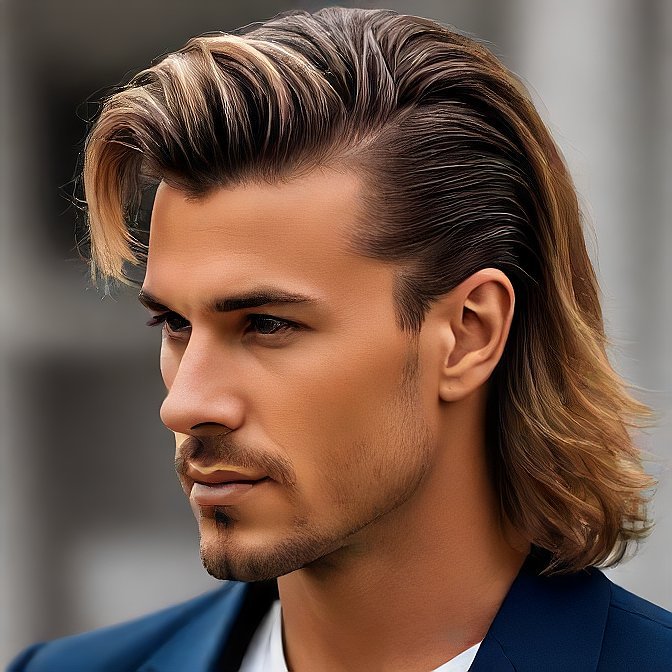
The type of hair you have will be one of the factors that will determine how many trims you will have on a regular basis, and the hair products that you will use.
Straight Hair
- Grows at an extremely high rate in an erratic way.
- Needs volumizing products
- The advantages of lightweight styling creams.
Wavy Hair
- Adds natural movement
- Requires anti-frizz control
- Reacts well to salt spray.
Curly Hair
- Needs consistent hydration
- Tends to shrink (makes it shorter than it is)
- That should be modeled with some consideration that prevents the triangle from being bulky.
Thick hair
- May get fat behind.
- Needs layering or thinning.
- Apply using matte clay or texturizing paste.
Fine or Thin Hair
- Requires volume-enhancing products
- Avoid heavy pomades
- Create contrast by closing up the sides.
The contour of your Mullet Haircut (and its what-it-is), and the suitability of your hair type to it are 2 items to know so that you can have a strategic approach to holding on to it rather than making a guess. The greater the conscious effort you make to keep your mullet, the larger will be the head-turning capacity.
Check Out: Best Straight Hair Layered Cuts: Sleek, Dimension-Adding Styles for a Polished Finish.
What Frequency of mullet haircut should you trim?

The Mullet Haircut is founded on equilibrium – side declaration is short and sharp and even the back of the head is long and kept. This style can be maintained by the regular trims. Not paying attention to them will soon leave your clean appearance untidy.
Ideal Dominance Schedule ( Every 2-4 Weeks Explained)
The most effective way to trim your mullet is to trim it at least 2-4 times a week:
- Bi-annual: Recommended when you are having a fade or a short side. This maintains the contrast being clear and does not allow the form to blur to the long back.
- Every 3-4 weeks: Multicoloured or coarser, longer or lighter mullets. Emphasizes maintaining the form generally without overabundant shortness of the back of the figure.
- Longer gaps: Don’t take longer than a month and have your mullet remain defined. It can be spoiled by growing out on the front and sides to ruin the symmetry of the style.
Consistency is key. The more routine you are used to doing, the cleaner your figure will be and be able to do the daily styling.
Hint That you should refresh your mullet haircut
You are likely to have a regular trimming schedule, but be on the alert for the following red flags:
- Too long neckline: The back starts to become bulky or unattractive.
- Lost shape on sides: The overall style is diminished as the sides lose their shape.
- Asymmetrical back: Hair starts to not only tangle, but also split and lose the number of layers it was intended to have.
As soon as these issues start spiraling out of control and your mullet grows unintentionally, they have to be addressed.
Home Made Visits vs Hairdresser Visits
DIY Touch-Ups:
- Appropriate for lesser changes, such as the neckline or the hair trimming.
- Will have to have good hands with the tools (clippers, scissors, comb).
- Good to stay fresh in-between barber visits.
Professional Barber Visits:
- Best on fades, rough layers or irregular growth.
- Guarantees accuracy in vital spots such as sideburns, crown and back layering.
- At least once a month, in order to maintain their look shiny and head-turning.
To achieve optimal performance, use a combination of both: DIY to maintain smaller parts of hair and the barber to maintain bigger parts of hair such as the fades and other major parts.
Mullet Haircut Styling – Weekly

A Mullet Haircut is not just a question of trimming but how you can look after those every day, make sure that you look presentable and clean. They can assist you in saving time and keeping your mullet in a cool and deliberate style by an easy, routine schedule.
Clothes washing frequency: Washing clothes: Do not overwash
- It usually requires 2-3 times per week, as far as hair type is concerned.
- The excessive washing can lead to loss of the natural oils resulting in the back part being dry, frizzy, or flat.
- The shampoo and conditioner must be light in nature to ensure that the hair does not become heavy with the conditioners being used.
Blow-Drying Techniques to style and add body
- Blot the front and sides so as to preserve a sharp, structured look.
- The back is lightly lifted and there should be movement and volatility as it dries.
- Bake at a medium temperature and close the form with a cold blast.
The blow-drying can also be used to comb the frizz and give a false lift that will allow the styling process to be fast in the morning.
Speedy Styling Trick of 5 Minutes on a Hectic Monday Morning
You can have a suave mullet in less than 5 minutes in a hurry:
- Very smoothly curve back the longer back to shape the natural texture.
- Optional: Just apply a little hairspray to maintain shape.
This daily regimen can be used on all forms of hair, keeping your mullet under control, but without the effort.
Having the Sides and Fade Clean

A sharp Mullet Haircut is based on the sides and fade. Well-maintained, clean edges display contrast with the longer back (length) standing out. Any well cut back treated would make it a mess leaving the sides unattended.
Fade or Taper (Maintaining)
- Frequency: Have your barber every 24-4 weeks according to the rate of growth of your hair.
- Blend Maintenance: Maintain smoothness and even slopes of the fade lines by clipping away to length transitions.
- Edges Detailing: To prevent a jagged, blunt appearance (about the ears and temples) be careful around them.
With frequent maintenance, your mullet will appear stylish and organized instead of featuring an unkempt and haphazard appearance.
Clean the House Necklace
You may maintain the neck even between the visits to a barber:
- Slice using the guard of a quality trimmer or clippers.
- Get the hair cut in at the nape to prevent bulk and snarls.
- Do not cut too high–be wary of the natural tilt of your neck so that you may be proportioned in appearance.
Neat neckline not only helps to improve the overall look, but it also increases the life of the fade.
Avoiding Summation Fallacies
- Over-blending: Can result in evenness, flattening the mullet.
- Under-blending: Gives the lines that appear unprofessional.
- Ignoring growth patterns: Hair is grown unevenly around the ears and atop the crown. When hair is not cut evenly, it will result in a messy fade.
Nineteen of those mistakes in mind then, you ought to be able to maintain your sides clean and in a business-like manner.
Conclusion
A Mullet Haircut is not only a kind of haircut but is to a great extent a statement of style, self-confidence and individuality. Its business in front, party in back approach demands a regular trim, hair styling and the appropriate hair care regimen to continue.
Mullet is always presentable with the correct knowledge of the type of hair you have and maintenance of the sides, fade and the back area of your scalp. Basic and everyday actions like routine clips, hydration, and the appropriate products are monumental in keeping up with the form and texture.
Also, do not forget that avoiding a daring mullet is simple. It must possess a balance, the line and the detail. The maintenance regimen prevents typical pitfalls, and your mullet will be a shining jewel in your crown as many years as you wear it.
For more info: Click Here.
FAQs
1. How do I Fade my Mullet Haircut?
The population (majority) should trim down every 2-4 weeks. Sides of high frequency and short areas should be groomed more regularly and longer areas on the back should be groomed less often.
2. Do I cut hair at home, my Mullet Haircut?
Yes, less significant ones like neckline, stray hair, may be done at home with the help of clippers/scissors. Nevertheless, skin fades and layering is preferably taken care of by an expert barber.
3. Which should be the optimal products with a Mullet Haircut?
Volume control as well as providing definition and frizz prevention, is provided through ultra-light pomades, matte clay, leave-in conditioners, and texturizing sprays. The products should be in accordance with your hair type.